The Earth is radioactive and Radiation is neither bad nor entirely harmful. Life itself exists through the electrical exchange between the environment and living beings. Knowledge of its existence and how these determinants can affect us is essential for create healthy environments.
To create projects with a complete vision of the holistic design and wellness, A balance between the living being, the inhabited space, and the environment is necessary. Therefore, it is important to take into account natural influences (the environmental impact of the place) and artificial influences (the impact generated by humans).
In order to shed light on this topic, we have created a couple of articles that will help us understand the importance of radiation for our health.
What is radiation?
Radiation It is a force of natural energy that surrounds us. Radiation is all around us: around us, inside, outside, beneath our feet, and above the world we live in. It's a part of our natural world that has been here since the birth of our planet and universe. Every living being, always, has been and continues to be exposed to radiation.
How does radiation originate?
In general, There are two main categories of radiation sources:
Natural source radiation
Natural background radiation includes radiation produced by the sun, lightning, primordial radioisotopes or supernova explosions, etc. It can be cosmic or terrestrial radiation.
Radiation from artificial sources
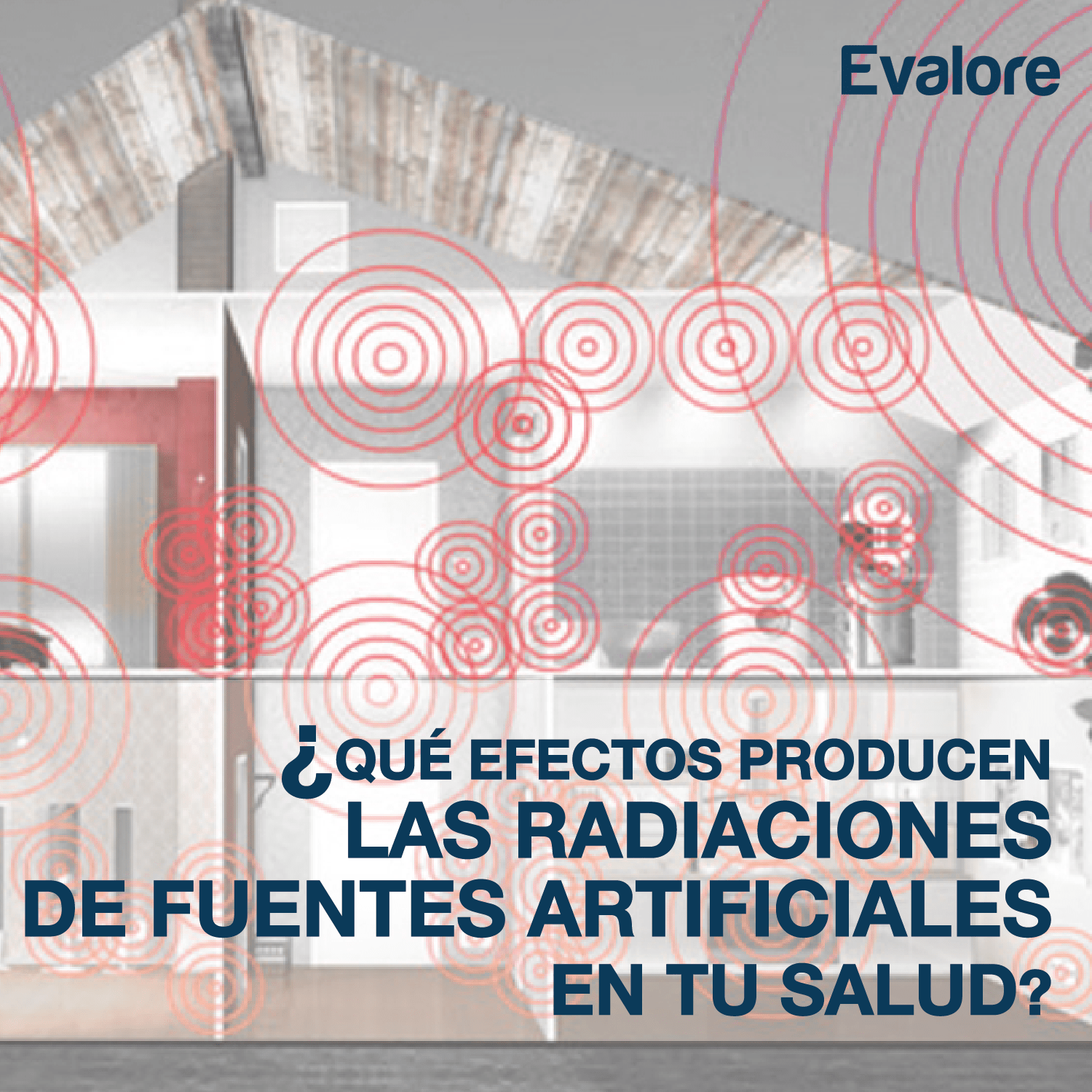
Artificial sources are those produced by human technological development. They include medical uses of radiation, nuclear test waste, industrial uses of radiation, communication antennae, electrical systems for housing construction, and the use of electromagnetic devices. The dose or exposure time to these radiations is what can define them as a toxic substance.
Are radiations dangerous to health?
For over a hundred years, people have lived under the belief that electricity and radioactivity were harmless to humans and the planet. The only way to understand the impact of all these influences is to take an environmental measurement of the space we inhabit or plan to build.
When used correctly, electromagnetic fields greatly improve our quality of life, health, and well-being. However, above certain levels, These fields can be harmful to health and affect the human body in various ways depending on the equation: frequency, intensity, exposure time and each person's sensitivity. This multifactorial condition and multisystem The environment can cause many reactions, discomforts, or even illnesses for inhabitants of houses, offices, hotels, hospitals, shops, and schools. The totality of environmental exposures experienced by a living being throughout its entire life is defined as the “Exposome”.
«The dose makes the poison.” Paracelsus. Father of Toxicology, 1493 – 1541
So the first step towards this vital renovation to create healthy environments is the holistic conception of our home or workplacean advanced design concept in which, before starting to work with what we see –The functionality and beauty of the space– it is studied and analysed what we don't see – natural and artificial electromagnetic fields – in order to to intervene in the possible negative influences of space that can affect people's physical, mental, and emotional health that inhabit it.
Why does radiation affect humans?
Humans consider the senses a gateway to the external world. Through them, it explores the environment and gathers information about it for its survival. The human body is full of natural radars or sensory receptors that detect any stimulus in the environment and send it to the brain, translated into an electrical signal. The human being is a being bio-electric y As such, driver of electricity. Through cell membranes and intracellular and extracellular body fluids, there are ionic currents, especially in nerve and muscle cells, with which its magnetic field is associated.
Radiation, both natural and artificial, affects us directly because it reaches our cells. The cell is an electromagnetic resonator capable of receiving and emitting high-frequency vibrations, a capacity thanks to which, are generated the Metabolic processes of the organism.
Furthermore, science has recently confirmede that humans have another sense, magnetoreception. This has been made possible by research in neuroscience, geophysics, and neuroengineering, after detecting that people's brain waves respond to the geomagnetic field. Our animal ancestry suggests that natural sensors of the geomagnetic field should also be present in human senses, and of course, they should be taken into account in the architecture we inhabit.
Conditions such as insomnia, stress, fatigue, anxiety, lack of energy, allergies, illnesses like electrosensitivity, cancer, and even infertility are societal problems that are on the rise. These illnesses but also depend on the way of life, but also of the environment that surrounds people. Greater attention should be paid to spaces where “essential” activities such as sleeping, creating, socialising, working and resting take place; and where 90% of our time is spent.
What are the types of radiation?
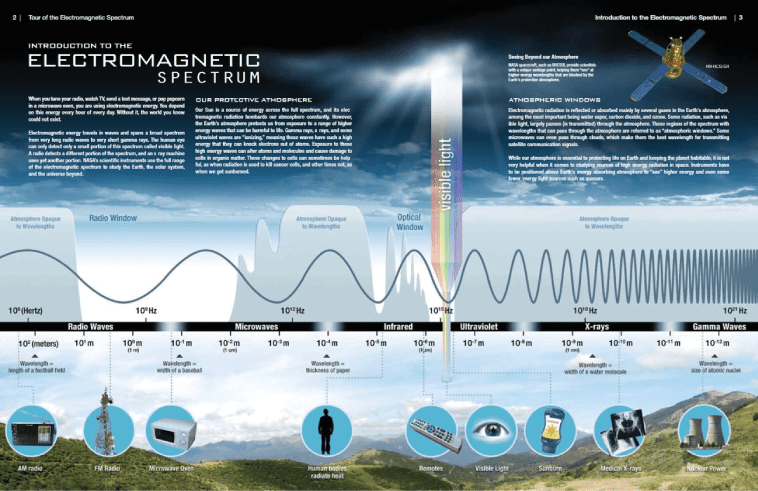
Depending on their frequency and energy, electromagnetic radiation can be classified as “ionising» and «non-ionising.» This article will discuss “ionising” radiation and in another article, will be developed non-ionising radiation“.
Ionising Radiation
Ionising radiation corresponds to electromagnetic signals of extremely high frequencies. Alpha, Beta, and Gamma rays are ionising radiations transmit sufficient energy to biological systems to break atomic bonds and divide molecules into positive and negative ions. This phenomenon is known as «ionisation», it impacts at an atomic level and with chronic doses can be carcinogenic, damaging DNA.
Alpha rays
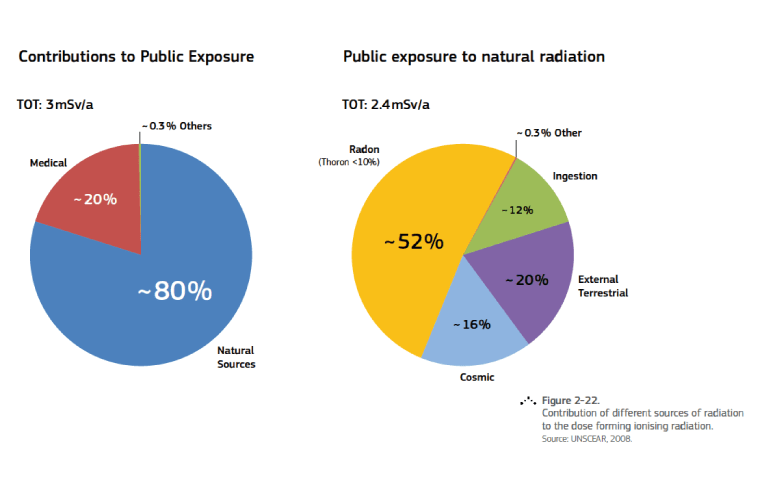
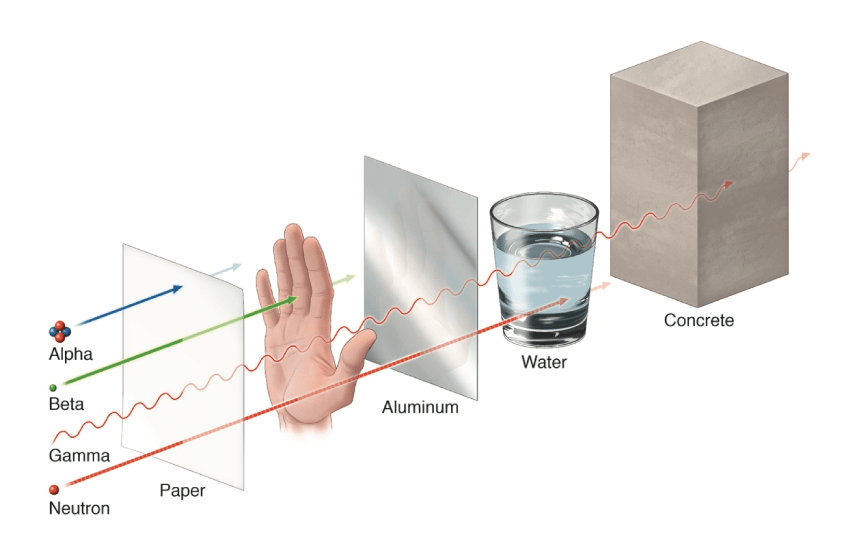
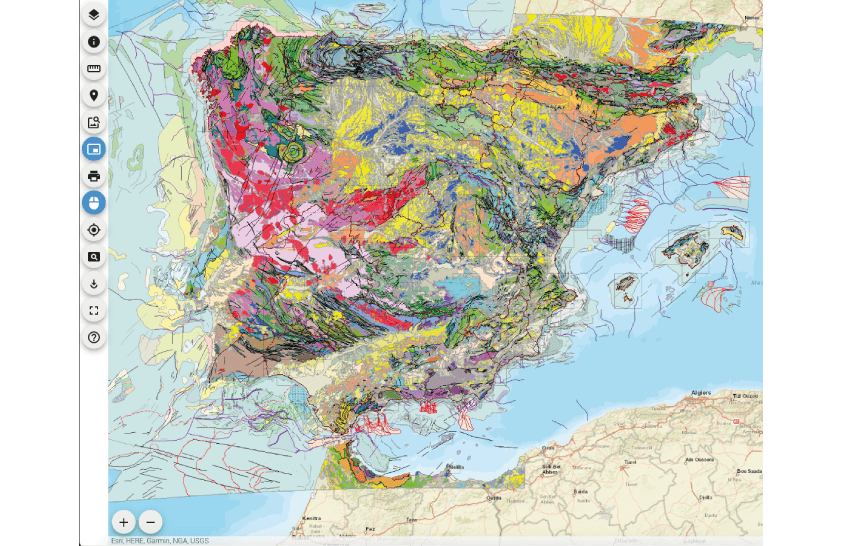
These are positively charged particles that are unable to pass through a sheet of paper or human skin and are stopped within a few centimetres of air. However, if an alpha-emitter enters the body, it can be extremely harmful. The most common source of this type of radiation is radon. Radon is a toxic gas released by the earth in areas with granite or containing uranium and thorium compounds; it can contaminate the air and water. It accounts for 50% of the natural radiation a human being receives each year, according to the “European Atlas of Natural Radiation”.
Beta rays
They are particles with much greater penetrating power than alpha particles, they are highly energetic electrons released from within a nucleus. The beta particle is therefore the electron that is ejected from the nucleus at high speed. However, they only penetrate about a centimetre into human flesh. Although beta particles have less ionising power than alpha particles, they are dangerous and contact with the body should be avoided.
Gamma rays
This is a radiation that, having no mass or charge, has great penetrating power, so much so that it can penetrate through buildings and bodies. These high-frequency G rays have enough energy to ionise living tissue and the body's molecules, potentially causing damage to important macromolecules such as DNA within cells, which causes cancer by producing free radicals. Gamma rays carry a large amount of energy which can even travel through thin lead and thick concrete for many metres.
These Gamma rays These are emitted vertically by the cosmos and the earth through faults, underground water channels, and grids known as global networks, which constitute channels for the circulation of electromagnetic energy (Hartman, Curry, Benker, and Peyré lines). This accounts for 20% of the natural radiation received by humans each year, according to the “European Atlas of Natural Radiation”.
Everyone is continuously receiving gamma rays emitted by geological disturbances or natural radioactive materials existing in the earth. Building materials, if they are extracted from the earth, they are also radioactive, so people are exposed to ionising radiation both outdoors and indoors. The amount of radiation received depends on the type of rocks that make up the soil and the materials used for building construction.
Knowledge of how all these radiations behave helps us to avoid these ionising sources when creating healthy environments. This can be measured using different technical and specialised engineering equipment.
La radiación ionizante puede causar daño celular, que a su vez puede aumentar el riesgo de cáncer y otros problemas de salud. La gravedad del daño depende de la dosis, el tipo de radiación y el tiempo de exposición.
The risks of ionising radiation The risks to human health are well known. Among the sources of ionising radiation of natural origin, radon gas is by far the most significant today. And according to European Directive EURATOM-2013, it is mandatory to measure radon concentration in new constructions. In December 2022, the Regulation on health protection against ionising radiation, approved by Royal Decree 783/2001, was published in the BOE. We will discuss radon in more detail in another, more specialised article.
People can be exposed to ionising radiation at home or in public spaces, at work or in a medical setting. It is known that beyond certain thresholds, the radiation can affect the functioning of organs and tissues. The probability of damage occurring is proportional to the radiation dose and the exposure time.. The risk is greater for children, adolescents, women and sick people, as they are much more sensitive to any type of environmental stress.
There are different types of radiation exposure: by inhalation, ingestion, internal or external exposure. Air, water, light, food, geographic location, and soil are key to living in a more or less contaminated environment..
We want to provide tools and create preventative strategies so that you expose your health, that of your family, clients, or workers as little as possible to these types of physical agents that can cause symptoms of discomfort in the short, medium, or long term.
What is Evalore's role?
Our aim is, firstly, to present all this information clearly and in an organised manner, as it is difficult to access or understand how health can relate to the built environment. Secondly, we can Propose effective strategies for designing spaces that minimise exposure to this type of radiation. electromagnetic fields to the entire population and the environment. The key is to measure the space and its surroundings before making any architectural or design decisions, and we can help you with this.
In Evalore We are pioneers in Spain in the development of environmental consultancy processes for the real estate and office sector. Our projects are often framed within the context of international environmental certifications such as LEED, BREEAM, WELL, or Passivhaus. The result is an optimised project, both in environmental performance and cost.

Marta Ribas, Interior Health Space Designer and Consultant
Founder of lacasamadre.com and collaborator of Espacios Evalore SLP