Increasingly, awareness is growing regarding the importance of preserving our environment. Consequently, SITES certification emerges as an essential tool for promoting sustainable landscape design practices. We will explore in depth what SITES certification entails, how it works, and what impact it has on creating more environmentally friendly and socially responsible outdoor spaces.
¿What is SITES Certification?
This programme was created to recognise and reward projects that apply sustainable practices in the design, construction and management of landscapes and outdoor spaces, making it ideal for parks, urban districts, new delimited urban developments and partial plans. It arises from an interdisciplinary collaboration led by the American Society of Landscape Architects, the Lady Bird Johnson Wildflower Center at the University of Texas at Austin, and the United States Botanic Garden. This led to the creation of the SITES Sustainable Initiative and the SITES v2 Rating System. During its development, the U.S. Green Building Council (USGBC) and GBCI played an active role. Additionally, certain elements of SITES credits were integrated into the LEED rating system, and SITES incorporated credits LEED in its own system. In 2015, GBCI acquired the SITES programme.

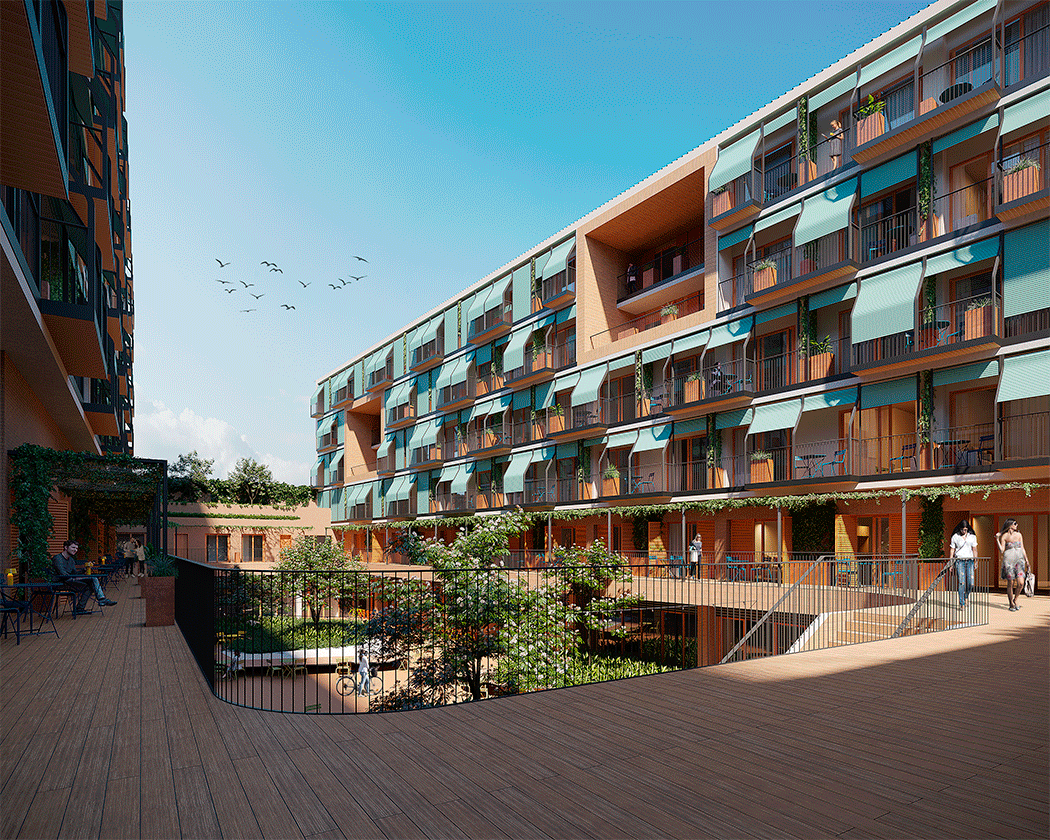
Source: Sports City Project in Ecuador
SITES Certification Process
It is organised into several stages, ranging from initial planning to the final project evaluation. Key steps include:
Preliminary Evaluation: Site evaluation and selection of a design and project management team with experience in sustainable practices.
2. Design and Development: development of a detailed design plan that meets certification requirements, integrating sustainable strategies at all stages of the process.
3. Implementationexecution of the design plan, ensuring the correct installation of all planned sustainable features and technologies.
4. Evaluation and Documentation: Data collection and documentation to support compliance with SITES certification criteria.
5. Review and Approval: submission of documentation to an official GBCI reviewer for evaluation and approval.
6. Certificationonce approved, the project officially receives SITES certification, thus recognising its commitment to sustainability and responsible urban space design.
Certification Structure
The SITES v2 Rating System distributes 200 potential points across 48 credits that are classified into 10 sections. These sections reflect the impact of each credit on improving site sustainability and protecting and restoring ecosystem services.
The sections are as follows:

Source: Evaluate
Projects receive SITES certification by meeting minimum requirements and a specified number of points for different performance levels. The 18 prerequisites of the rating system do not receive point value, whereas optional credits do receive a point value or a range of potential points, providing additional flexibility to projects.
Certification under the SITES v2 Rating System is awarded according to the following scale:

Source: https://www.sustainablesites.org/
Benefits of SITES Certification
It brings a series of key benefits for the environment and the community:
• Natural Resource Conservation. It promotes practices that conserve and protect natural resources, including efficient water management and the promotion of biodiversity.
• Environmental Quality Improvement. It contributes to the improvement of environmental quality, by reducing air and water pollution and mitigating the urban heat island effect.
• Social and Health Benefits. Outdoor spaces designed to SITES standards promote health and well-being, offering green areas for recreation and relaxation.
• Recognition and Differentiation. Provides official recognition to projects that adopt sustainable practices, differentiating them in the market and promoting innovation in landscape design.
• Long-Term Cost Reduction. Despite the initial additional costs, SITES certified projects achieve significant long-term savings in operation and maintenance.
Costs Associated with SITES Certification
The procedure for obtaining SITES involves some associated costs, which include:
• Certification Fees fees payable to the Green Building Certification Institute (GBCI) for project registration and certification.
• Consultancy Fees Costs related to hiring specialised consultants and advisors in sustainable practices.
• Direct and Indirect Implementation Costs These include the costs of integrating different agents, potential project modifications, and other measures necessary to meet certification requirements.

Source: https://sustainablesites.org/node/8505
SITES Certification for Existing Landscapes
It's important to highlight that, in addition to standard certification for new projects, there is the SITES Certification for Existing Landscapes. This approach allows for the evaluation and rewarding of sustainable practices in the management and maintenance of built urban spaces, promoting continuous improvement and long-term sustainability of existing outdoor spaces.
The SITES certification promotes sustainable and socially responsible landscape design practices, helping diverse professionals implement nature-based solutions. Likewise, SITES projects enhance biodiversity, combat climate change, conserve resources, promote public health, and protect critical ecosystems, thereby promoting sustainability.
In Evalore We are dedicated to advising our clients on how to improve their projects and enhance their contribution to caring for the planet. Are you interested in learning how we can help you? Contact us right now.

Camila Harguindeguy
Civil Engineer and Sustainability Consultant, Espacios Evalore SLP