What is LEED Recertification and how can it add value to your building?
All LEED-certified buildings can apply for LEED Recertification, which consists of verifying that, over the years, the building continues to function according to LEED standards. For this purpose, it must be supplied Updated performance data in energy, water, waste, transport, indoor air quality, toxin-free environment and occupant satisfaction. Furthermore, recertification will allow increase the building's certification level. If your project has already LEED certificate, in this article we will explain What does recertification involve? And why Evalore is the company to trust with the recertification process.
The LEED Recertification is a process that allows buildings to maintain their LEED certification for a period of three years. It is a way to verify that the building continues to function as designed and that its sustainable practices are still in place.

Source: Hotel Vela project by EVALORE for IG. Photo edited by EVALORE.
Mainly, LEED Recertification incentivises all those occupied and in-use projects that were previously LEED certificates, to supervise their Performance data, demonstrate maintenance of LEED requirements and standards, after their construction and occupation. Generally, all LEED projects -past, present and future- including LEED Building Design and Construction BD+C and Interior Design and Construction ID+C, regardless of their rating system or initial version, can be recertified by providing 12 consecutive months of data in each of the assessment categories. Allowing for the evaluation of energy, water, waste, transport, indoor environmental quality, and occupant satisfaction performance in the building. Furthermore, projects that use this recertification route They will obtain certification for the latest version the LEED.
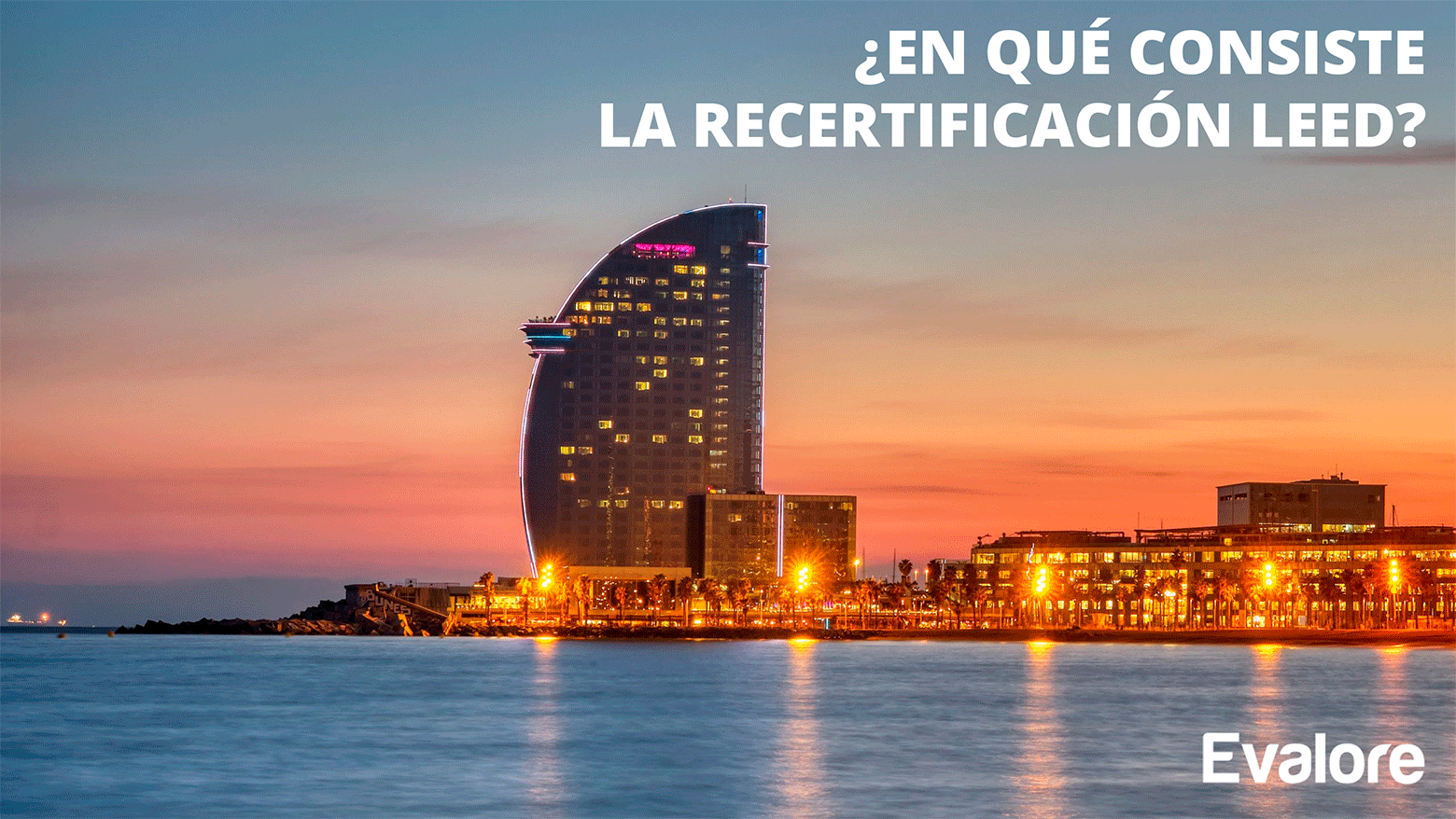
Source: Hotel Vela project by EVALORE for IG. Photo edited by EVALORE.
Recertification for LEED-EBOM and LEED v4.1 projects
In particular, projects certified under any version of LEED for Existing BuildingsLEED-EBOM) must be recertify mandatorily at least once every five years to maintain their certification, emphasising the importance of continuous improvement. New credits that had not previously been documented can be added. Covering the performance period from the previous certification up to the new application.
Instead, for the projects with the latest LEED v4.1 version, that period is called the «reporting period» and lasts for 12 months. Some categories, such as energy and water, require data for the whole period, i.e. information for 12 consecutive months of total consumption in the building. Other categories allow for at least one annual analysis within the reporting period.
LEED recertification encourages project teams to monitor their performance data and demonstrate that their buildings are functioning as they were at the start of the project..
It is also important to highlight that, LEED v4.1 O+M recertification, is recertification available for all LEED projects, It is necessary because it allows the current performance of the building to be quantified., implement improvements, and have a sustainable building. To carry out this process, it is advisable to have a consultancy that will be responsible for entering the data through platforms such as Arc. If you are interested in knowing more, this article will explain it to you.
What are the benefits of LEED Recertification?
- Maintain and improve your building. To ensure the building continues to comply with the standards assessed in the year it was certified, and to improve upon new requirements.
- Supply updated information annually, about performance in energy, water, waste, transport, indoor environmental quality, and human experience. It allows the building to be in constant improvement, implementing new technologies and advances in service management.
- Improve the building's certification level., for the latest available version of the rating system, currently LEED v4.1 O+M.
LEED Recertification with Arc
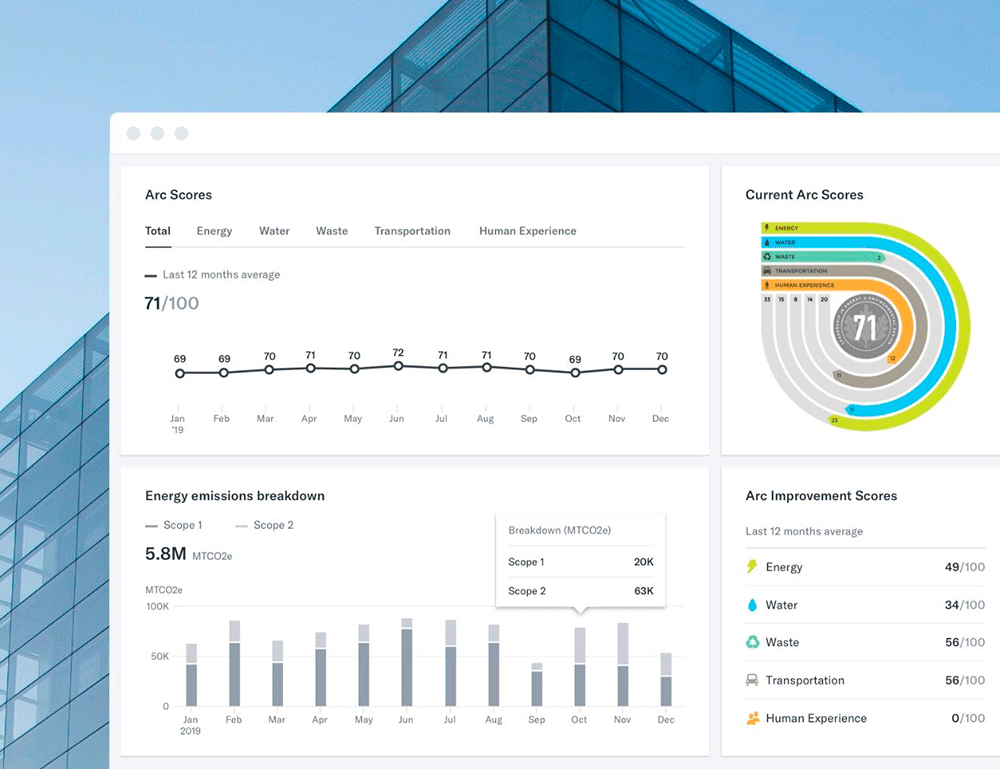
Source: https://arcskoru.com/
Arc is a GBCI platform that allows for the monitoring of building sustainability performance across five fundamental metric areas:
- Energy
- Water
- Materials and Resources Waste
- Transport
- Indoor Environmental Quality Human Experience
This tool, available for all LEED-certified buildings, allows consultancies to carry out the recertification process via two routes. One of these is through LEED Online, by locating the project to be recertified and being redirected to Arcskoru.com to activate the project. The other way is through Arcskoru.com Where can you search for the project directly?. Data and documents uploaded to Arc are synchronised with LEED Online.
What are the steps for LEED Recertification?
It is important for recertification to have collected information annually on the performance data. In addition to the supporting documentation (receipts, management certificates, reports, etc.)
- The consultant will present the documentation with the data from the last 12 months en LEED Online.
- LEED Online will automatically calculate performance scores and determine your LEED points.
- GBCI will conduct a recertification review and grant a maximum of 100 LEED points as follows:
- Energy performance1-33 points
- Water yield1-15 points
- Waste management1-8 points
- Transport performance1-14 points
- Indoor environmental quality1-20 points
- LEED Certification10 points. Will be automatically awarded to all projects that have previously obtained LEED certification.
- The project must obtain a minimum of 40 points to achieve LEED recertification.
- The GBCI will award one of the following LEED certification levels:
- Certificate: 40-49 points
- Silver: 50 – 59 points
- Silver: 60 – 79 points
- Platinum: 80+ points
- Projects must introduce annual data to ensure that the project maintains a high level of performance. A project may request an exception to this requirement on a case-by-case basis.
While not mandatory for all LEED projects to recertify, recertification allows for the documentation of the project's continuous improvement, quantification of its investment, and obtaining the latest valid certification.
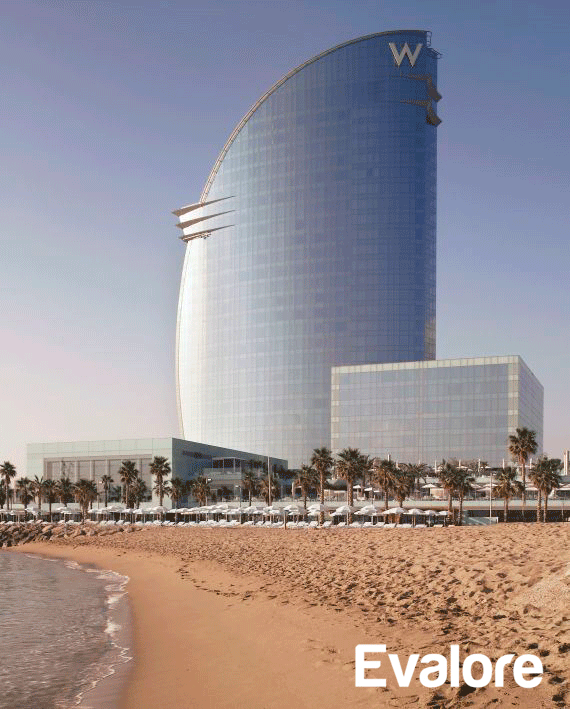
Source: Hotel Vela project by EVALORE for IG. Photo edited by EVALORE.
A LEED Recertification project obtains a LEED Recertification.
With LEED recertification, your project has a new certification, you will obtain the certification LEED for Operations and Maintenance (LEED O+M) according to the latest version of the classification system available, currently, it is LEED v4.1. In addition, you can order all the same available reconnaissance materials.
How long does LEED recertification for a project last?
It is valid for three years, during which time Updated data must be supplied annually. of the building to maintain active recertification. Every three years, data must be submitted for review in order to renew the certification and document ongoing achievements. Projects that do not submit annual performance data will no longer be considered certified. If they subsequently decide to opt for new recertification, they will have to restart the recertification process and pay an additional registration fee. It is recommended to review the Recertification Guide, which details the requirements and process.
How much does LEED Recertification cost?
LEED recertification fees include a registration fee and a review fee. The review costs depend on the gross area of the project, varying according to its size. Please consult the Prices of LEED recertification.
Active projects, meaning those that have undergone continuous monitoring and submit their data at least annually, are exempt from the registration fee.
Spaces will propose measures during the process that allow for higher levels of recertification. If you would like us to help you recertify your building, please contact us.

Laura Barrios Mogollón
Architect and Sustainability Consultant, Espacios Evalore SLP