The way we build plays a key role in the fight against climate change. The global building stock alone accounted for 39% of carbon emissions in 2019. Governments have begun to understand their responsibility in this regard and have started to pass legislation to ensure emissions are reduced across all sectors, including the building sector. In Europe, according to Directive 2010/31, buildings must be almost no consumption (nZEB construction) since the beginning of 2020, i.e. to be built to Passivhaus standards.
The Passivhaus standard (or Passive House, as it is known in English-speaking countries) enables energy consumption to be reduced by up to 90%, and consequently carbon emissions. In fact, a 1,500 m² Passivhaus can achieve a reduction in emissions of up to 10 tonnes of CO2, ¡the equivalent of planting 1,000 trees! Passivhaus constructions also guarantee maximum comfort, high indoor air quality, and an increase in the property's value. Let's look at what it involves and the benefits of this advanced way of building.
What is the Passivhaus standard?
The Passivhaus standard is the most demanding energy efficiency standard in the world. It focuses on minimising building energy consumption while maintaining high levels of internal comfort. Formulated in Germany in 1988, Passivhaus is based on exhaustive procedures in project development and construction execution. The latter ensures that the performance of the built building corresponds to the theoretical design values.
Passivhaus focuses on minimising the energy consumption of buildings while maintaining high levels of comfort inside.
2. The 5 basic principles of Passivhaus
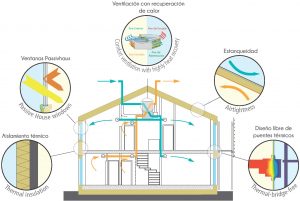
The Passivhaus standard has 5 essential principles. These 5 principles work together to guarantee the final performance of the building. For the performance to be as estimated, the Passivhaus principles must be verified during the design phase and, crucially, during the construction process.
The 5 Passivhaus Principles
2.1 Excellent thermal insulation
In a Passivhaus, a key factor is achieving a building envelope with very low thermal transmittance. To achieve this, it is necessary to install abundant thermal insulation in the walls, floor, and roof of the building.
2.2 Absence of thermal bridges
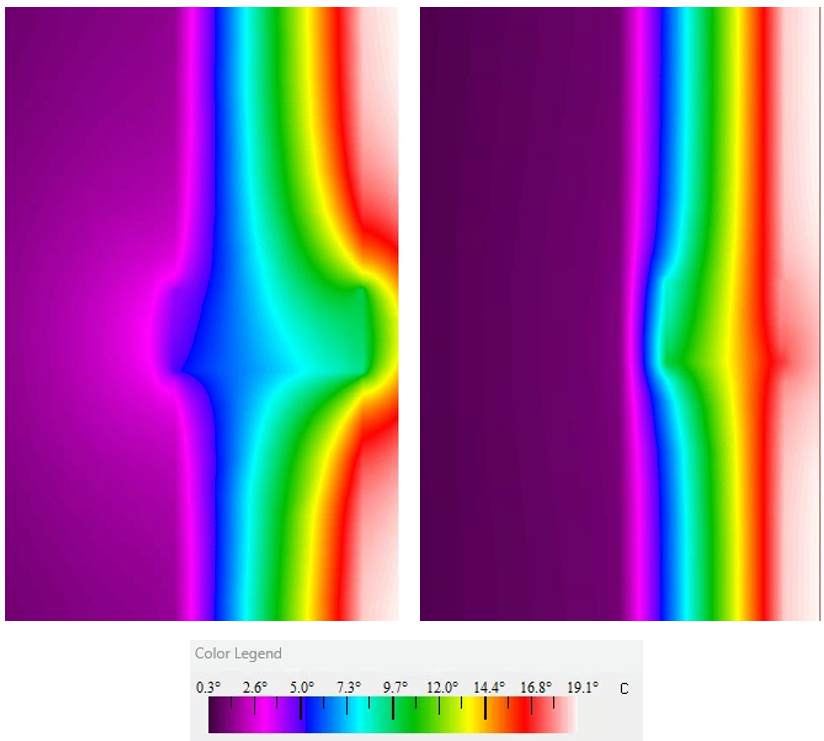
Thermal bridges are points in the building envelope where thermal transmittance is higher, resulting in considerable energy loss. They are generally caused by a discontinuity in the insulation. Passivhaus requires the minimisation of thermal bridges throughout the entire building envelope, allowing for continuity of insulation. Thermal bridges also create cold spots on the interior, which can lead to dampness, damage to materials, and a loss of internal comfort.
2.3 High-performance joinery
Passivhaus buildings require the use of high-performance, insulated, and airtight windows and doors. In the case of windows, two and even three panes are used, with the outer ones being low-emissivity with an inert gas-filled cavity. This ensures very low thermal transmittance, excellent acoustic insulation, and reflection or retention of energy in different seasons.
2.4 Airtightness
Contrary to the belief held by professionals in the construction sector, most of the energy in a building is lost through convection (the movement of fluids, in this case air) rather than through conduction (the transfer of heat through one or more materials). For this reason, in Passivhaus construction it is essential to ensure airtightness against the outside air, that is, to minimise the all-too-common air infiltration. To achieve this airtight envelope, it must be ensured during the design phase and verified during construction that there is a continuous air barrier in the facades, roof and floor to guarantee airtightness.
2.5 Mechanical heat recovery ventilation (MVHR)
However, if we create an airtight building envelope, it will be necessary to ensure indoor air renewal for health reasons. To this end, in Passivhaus projects, we need to incorporate a dual-circuit mechanical ventilation system which, in this case, will include a heat recovery system that allows us to minimise energy losses. In certain climates, thanks to the heat recovery unit, it is even possible to heat and cool buildings using ventilation alone, without the need for specific air-conditioning systems. One of the advantages of mechanical ventilation, in a context of extreme pollution alerts, is that it allows us to control air quality much more precisely, treating it when necessary.
The 5 principles of Passivhaus in 2 minutes
3. Passivhaus-specific tools and products
In the context of Passivhaus, there are a number of tools and products that we will need to rely on to meet the standard's requirements and achieve maximum performance. We can distinguish between certified components (materials and systems for construction), software, and testing techniques.
3.1 Passivhaus Certified Components
These are components whose suitability has been assessed and certified by the Passivhaus Institut. Their use is not mandatory, but their seal of quality is a guarantee. Among the certified components are facade systems, windows, ventilation systems, heat pumps, and airtightness systems.
3.2 Passivhaus-specific software
PHPP (or Passive House Planning Package)
It is an Excel-based tool used in all Passivhaus projects as an energy modelling tool. All the parameters relevant to the project (climate, building characteristics, airtightness test results, etc.) are entered into it, and it provides the performance results that we use to verify compliance with the standard.
Therm
It is free software that allows us to analyse thermal bridges in a Passivhaus project in 2D. The information obtained will then need to be incorporated into the PHPP. In addition to Therm, there are other, more complex software programmes such as Flixo and Trisco, the latter being a 3D programme.
BIM (or Building Information Modelling)
Carrying out the architectural project with the support of BIM generation software can facilitate obtaining data for the Passivhaus PHPP. Furthermore, there are many other synergies, especially with the subsequent management of the property.
3.3 Testing techniques in Passivhaus
During the construction process, we will rely on a series of techniques that will guarantee the subsequent performance of the Passivhaus building. Among these techniques, we can highlight the following:
Blower door test to measure the airtightness of the building envelope
Duct tightness test to measure the airtightness of ventilation ducts
Thermal imaging cameras To check for thermal bridges
4. Passivhaus worldwide
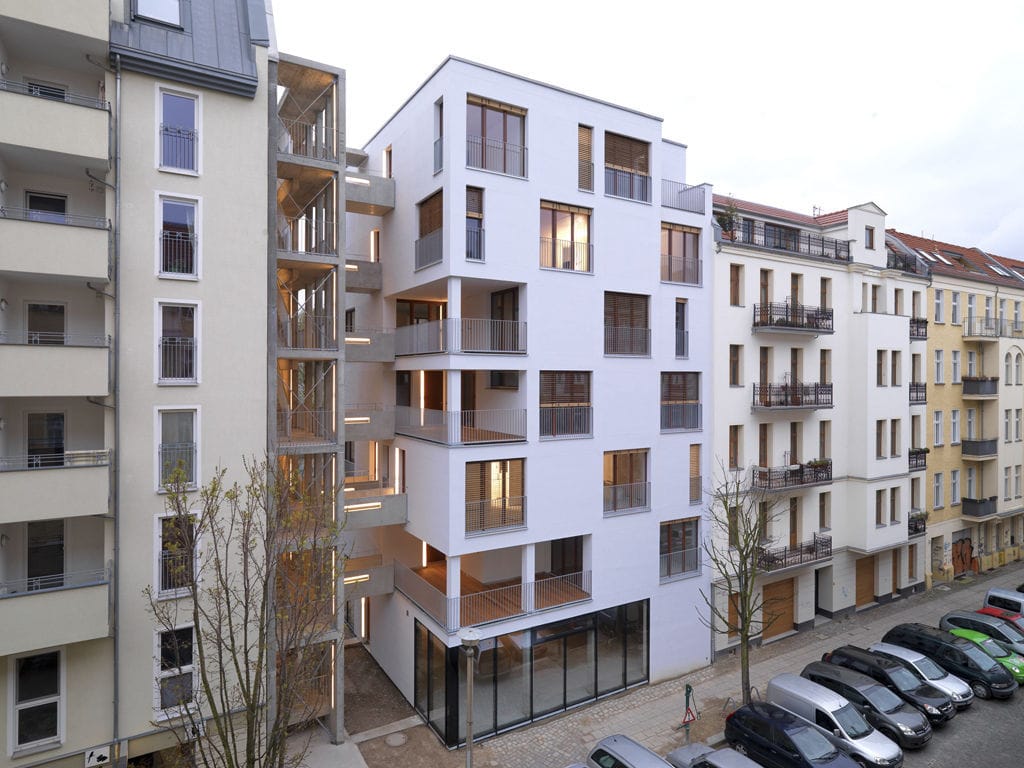
Although the Passivhaus standard originated in Germany and was designed for cold climates, the Passivhaus methodology can now be applied to any type of building anywhere in the world, under almost any climatic conditions. In fact, there are more than 50,000 Passivhaus projects worldwide, in over 40 countries and across four continents, demonstrating the system’s versatility and its ability to adapt to any climate.
Passivhaus buildings can be configured in very different ways, incorporating different and disparate construction systems that often correspond to the local climate and resources. However, all projects have a common denominator. All Passivhaus projects incorporate, at some level, the 5 principles mentioned above. This common denominator guarantees maximum energy efficiency, air quality, and thermal comfort.
The Passivhaus standard can be applied to any type of architectural project and in any climate
5. What are the benefits of the Passivhaus standard?
Passivhaus is a tool that allows us to verify that our home meets specific performance parameters. These parameters relate to the annual consumption of the building for heating and cooling, the maximum energy demand at a specific moment, and the volume of external air infiltration. Compliance with these guarantees maximum thermal comfort and minimum energy consumption. If we add to this adequate ventilation levels accompanied by filtration systems, we will obtain a improved air quality in our Passivhaus building.
5.1 Minimum energy consumption and economic savings
Passivhaus buildings consume up to 90% less energy than a building of a similar type. This results in considerable savings on energy bills, leading to a very short payback period.
5.2 Carbon emission reduction
This reduction in energy consumption leads to an equivalent reduction in carbon emissions. For this reason, Passivhaus buildings are at the forefront of the construction sector in the fight against climate change.
5.3 Maximum thermal and acoustic comfort
Given the performance of the building envelope, Passivhaus buildings guarantee minimal thermal variation inside throughout the day and across the seasons. Likewise, the absence of thermal bridges and the presence of highly efficient glazed surfaces mean there are no cold surfaces inside the building. These two characteristics promote maximum thermal comfort indoors. Furthermore, the super-insulated envelope itself provides maximum insulation from external noise.
5.4 Maximum material durability
The airtight envelope of a Passivhaus building prevents the ingress of air infiltration and, with it, water, which can become trapped inside the walls, damaging materials and causing damp. In turn, the absence of cold spots on the interior prevents surface condensation, which in turn causes damage and premature ageing of materials.
5.5 Property Revaluation
All the advantages mentioned above mean that Passivhaus buildings are more highly valued on the market. FIABCI (the International Real Estate Federation) estimates that this type of building commands a 20% premium over an equivalent property of the same type.
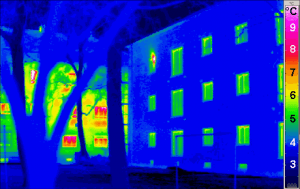
Passivhaus building without thermal bridges via thermographic camera
6. Compatibility with other certifications
Passivhaus projects are perfectly compatible with other market-driven sustainability certifications such as LEED, BREEAM or VERDE. On the other hand, Passivhaus makes particular sense when applied in conjunction with the WELL health and well-being standard. In fact, when a project jointly addresses the WELL Certification and applying Passivhaus principles multiplies the benefits for the environment and occupants.
7. Are Passivhaus buildings profitable?
When discussing Passivhaus, it is important to remember that “the cheapest and cleanest energy is the energy that is not consumed”. Generally speaking, constructing a Passivhaus building costs between 31% and 81% more than a conventional building. This additional cost is due to the incorporation of high-performance joinery, mechanical ventilation with heat recovery (MVHR) and airtightness measures.
However, and although all these attributes involve an additional cost, there are already cases where the principles of Passivhaus are being implemented without additional cost. It is in the case of large buildings, and specifically multi-family dwellings, where costs are most reduced, establishing clear economic advantages when building to the Passivhaus standard..
The additional cost of implementing Passivhaus has a payback period of less than 10 years due to the minimum energy consumption.
In any case, a Passivhaus building (whether it's a home or another type of building) is very profitable in the long term, as it not only allows for amortisation within the first 10 years, recovering that potential extra investment, but also increases the value of the property. The opposite happens in a conventional building, where high energy costs will accompany us throughout the building's useful life, representing a burden in the medium to long term.
On the other hand, the regulation itself, which comes into effect in 2020, will put downward pressure on the price of inefficient homes and buildings, reducing their market value. Tax penalties are even anticipated for those buildings that do not comply with the regulations in the medium term. Therefore, building today without Passivhaus criteria is a bad investment and could soon even lead to financial ruin.
In Spaces Evaluate we are ready. We know that applying sustainability, well-being, and energy efficiency standards like LEED, BREEAM, Passivhaus, or WELL is the only path towards a sustainable society.

Pablo Muñoz, CPHD, LEED GA, BPI MFBA
Co-founder and CEO of Espacios Evalore SLP