SITES Certification for Sustainable Outdoor Spaces
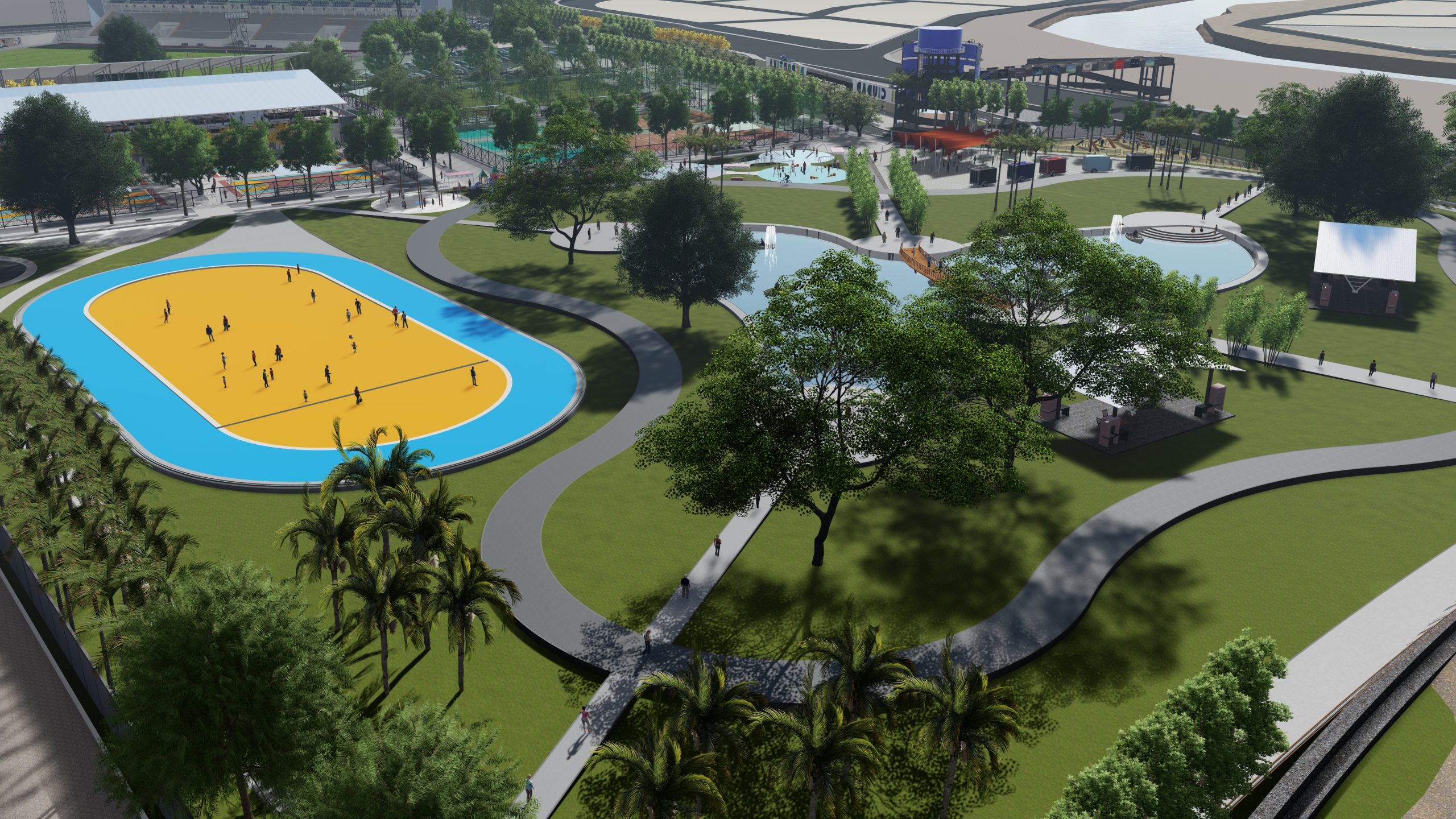
SITES is especially useful in projects where outdoor space is not a secondary element, but an active infrastructure: parks, urban districts, defined urban developments, partial plans, campuses, resorts, sports complexes, hotels and existing open spaces. From Evalore, we support the process so that the certification is technical, documentable and aligned with the real value of the project.
SITES, the international standard for sustainable landscapes
The SITES certification recognises and rewards projects that apply sustainable practices in the design, construction and management of landscapes and outdoor spaces. Its objective is to promote projects capable of protecting ecosystems, improving environmental quality, and generating real benefits for people and communities.
The system arises from an interdisciplinary collaboration led by the American Society of Landscape Architects, The Lady Bird Johnson Wildflower Centre of the University of Texas at Austin and United States Botanic Garden. During its development, there also participated USGBC y GBCI, and in 2015 GBCI acquired the SITES program.
Unlike approaches focused solely on the building, SITES works with the terrain, landscape, and outdoor space as key pieces of sustainability. It assesses how the project manage water, protect biodiversity, reduce pollution, mitigate the urban heat island effect, and promote public health.
Why apply SITES to an urban or landscape project?
Applying SITES allows landscape sustainability to be converted into a Technical, measurable, and verifiable roadmap. For a developer, owner or fund, this means having a clear framework in place to justify design decisions, anticipate environmental requirements and demonstrate that the project generates value beyond its aesthetic or recreational function.
Certification provides a particularly valuable insight for projects with large outdoor areas, where decisions about vegetation, drainage, paving, water consumption, maintenance, lighting, or outdoor comfort can influence the environmental and operational performance of an asset for years to come.
SITES also helps to position the project in the market through a Official recognition of its sustainable practices, reinforcing its differentiation from other urban, landscape, or real estate developments.
Benefits of SITES certification
SITES certification process
Aids in evaluating and recognising sustainable practices in the Management and maintenance of already built urban spaces. This variant is particularly relevant for existing assets that want to improve their environmental performance, optimise their operation and extend their long-term value.
1
Pre-assessment or feasibility study
We analyse the starting point of the project or building, the client's objectives, and the level of certification achievable. During this phase, the most suitable requirements, credits, or strategies are identified, along with their technical, economic, and documentary implications.
2
Design support
We accompany the project team to integrate certification requirements into the technical documentation. This phase allows for the coordination of disciplines, anticipation of key decisions, and avoidance of subsequent corrections that could lead to cost overruns or delays.
3
On-site support or implementation
During the construction, renovation, or implementation of measures phase, we provide support in reviewing evidence, monitoring requirements, coordinating with stakeholders, and document control.
4
Certification
We gather, review, and submit the final documentation to the relevant certifying body. We also accompany the client throughout the review process, responding to comments and closing out until the certificate is obtained.
Why Evalore?
- We are a Specialist sustainability consulting applied to real estate.
- We have worked on offices, housing, hotels, educational centres, retail premises and industrial assets.
- We manage LEED, BREEAM, WELL, SITES and Passivhaus certifications with a technical, economic, and commercial focus.
- Our methodology has helped to achieve over €500,000 saved on investment costs in a large-scale BREEAM project.
- We increase the value of your assets through sustainability.
They already trust us.


Success stories
We support national and international clients on projects where sustainability is a key consideration real value for the asset, users and investment.
Frequently Asked Questions about SITES Certification
What is SITES certification?
SITES is a certification focused on landscapes, outdoor spaces, and green infrastructure. It assesses how the design, construction, and management of a space contribute to biodiversity, water management, soil, health, climate resilience, and ecosystem services.
2. What projects can be certified with SITES?
It can be applied to parks, campuses, hotels, resorts, urban developments, residential green spaces, corporate outdoor areas, or existing landscapes. It is especially useful when the outdoor space forms a relevant part of the project's environmental, social, or commercial value.
3. What value does SITES bring to the client?
SITES permits us to demonstrate that landscape is not solely an aesthetic element, but an environmental infrastructure with an impact on biodiversity, water, exterior comfort, the heat island effect, health, and resilience. It can reinforce the ESG narrative and differentiate the project in demanding markets.
4. Can SITES be applied to existing spaces?
Yes. SITES for Existing Landscapes allows for the assessment and improvement of already built or operational exterior spaces. It is an interesting tool for owners who want to improve sustainability, maintenance, biodiversity, outdoor comfort, or user experience.
5. Is SITES compatible with LEED or WELL?
Yes. SITES can complement LEED or WELL projects very well, especially when outdoor areas carry weight in the user experience or in the environmental strategy of the asset. Good coordination allows for the exploitation of synergies and avoids duplicate documentation.
What is the relationship between SITES and climate resilience?
SITES allows us to address issues such as rainwater management, urban heat island reduction, biodiversity, plant selection, soil protection, and outdoor comfort. These aspects are increasingly relevant for adapting assets to more demanding climate scenarios.
7. When is it advisable to propose SITES?
It is advisable to consider it from the initial stages of landscaping, urbanisation or master planning. The sooner it is integrated, the greater the project's capacity will be to optimise design decisions, reduce adaptation costs and maximise the environmental and commercial value of the exterior space.
Other Environmental Certifications
Define the ESG roadmap for your asset or portfolio
Tell us where your project or asset stands, and we will help you identify the most suitable certification, priority actions and technical strategy with a better balance between environmental impact, cost, feasibility and property value.