Lean Construction is a new working philosophy with countless competitive advantages, but how did this trend arise? By the end of the 20th century, Toyota had captured 40% of the Japanese market by applying a new philosophy to automotive production. This philosophy delivered higher quality at lower cost, with shorter lead times and the elimination of waste. As a result, 30 years later, this philosophy is applied globally across all industries under the term “Lean”. Furthermore, Toyota is the only car manufacturer among the world’s 100 richest companies.
Lean: minimum losses, maximum value
The designation Lean is used for those production systems that optimise available resources, guaranteeing fewer product defects and greater variety. Its origin lies in the Toyota Production System (TPS) developed after the Second World War by the Japanese. The TPS I was looking to eliminate activities that did not add value to the final product as much as possible, providing better quality at a lower cost.
In the late 20th century, TPS was rebranded in the West under the term Lean and was adapted to other sectors under the name Lean Production. Thus, this philosophy of work based on new production models finally arrived in construction, being called Lean Construction.
¿What is Lean Construction?
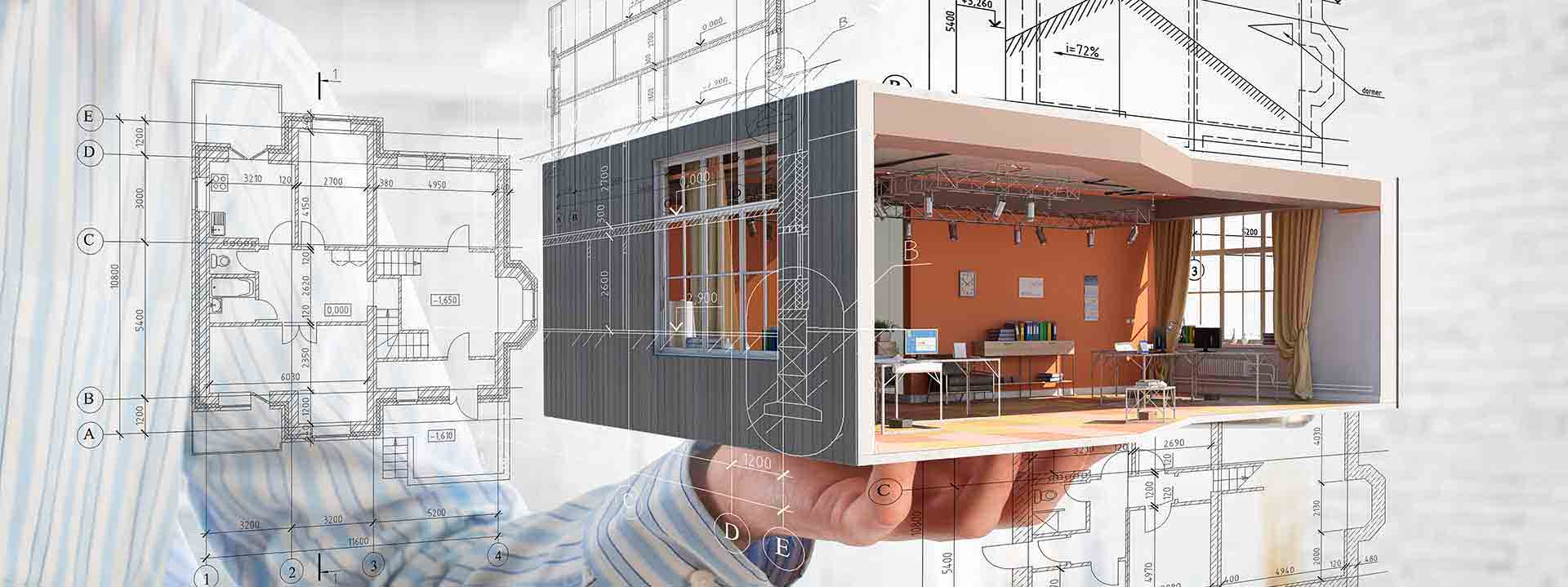
The Lean Construction It is defined as the optimisation of activities that add value to a construction project whilst reducing or eliminating those that do not. To this end, Lean Construction develops specific tools applied to site execution and to establish a production system that eliminates or minimises waste.
In Lean Construction, 8 categories of waste or non-value-adding activities are established:
- Untapped talent
- Inventory
- Movement
- Wait
- Transport
- Defects
- Over-production
- Over-processing
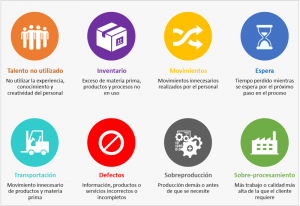
Source: www.practicorte.com
Similarly, Lean Construction focuses on improving three processes with the aim of increasing efficiency
- Transformationminimising or eliminating flows, understood as the journey materials take until installation on site.
- PlanningDefining criteria and strategies to achieve project objectives.
- Controlensuring each activity will take place in the planned sequence.
Lean Construction is defined as the optimisation of value-adding activities in a construction project while reducing or eliminating non-value-adding ones.
Lean Construction, like all Lean philosophy, aims to find excellence, not only in the final product but also in the responsible company. To achieve this, it seeks apply philosophy to the whole life cycle Project completion
- Design
- Engineering
- Pre-marketing
- Marketing and sales
- Execution
- After-sales
- Customer service
- Maintenance
- Administration
- Logistics and inventory relationship
¿How to implement Lean Construction or Waste-Free Construction?
Being that the construction sector is of a unique nature, Lean Construction requires a set of sector-specific tools. In any case, these tools can be used independently or, preferably, jointly:
Lean Project Delivery System (LPDS)
LPDS is a working methodology inherent to Lean Construction based on an integral collaborative process. This way, it facilitates the alignment of objectives of the different stakeholders involved, resources and constraints in the project, design, supply, execution and maintenance stages. LPDS requires understanding the construction process as a value-generating process in which the different stakeholders involved appear at the beginning of the project's conception.
Integrated Project Delivery (IPD)
IPD is understood as the set of actions aimed at unifying criteria in the management of systems, business practices, and the people involved. In this way, IPD leverages the talent and viewpoints of everyone with the purpose of optimising results, increasing value, minimising waste, and improving efficiency throughout the process.
Last Planner System
The Last Planner System is a production control method in Lean Construction, designed to deliver reliable workflow and rapid learning. To achieve this, we integrate into the planning the consideration of ideal practices, feasible practices, practices to be performed, and practices that have already been performed. These considerations will be taken into account when preparing construction planning and assigning responsibilities.
Loss Measurement
Measuring losses involves the quantitative study of the time workers spend on-site. Through the analysis of crew time distribution, productivity is estimated and activities to be optimised are detected.
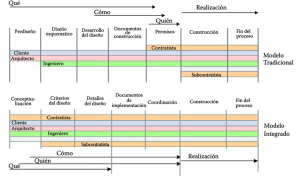
Source: www.researchgate.net
Lean Construction can be applied to a wide range of projects, including: * **New building construction:** This includes residential, commercial, industrial, and institutional buildings. * **Renovation and refurbishment projects:** Whether it's a minor upgrade or a major overhaul, Lean principles can improve efficiency. * **Infrastructure projects:** This covers roads, bridges, railways, airports, tunnels, and utility networks. * **Manufacturing and industrial facilities:** The principles of Lean are highly transferable to the construction of complex manufacturing plants and industrial sites. * **Energy projects:** This includes power plants, renewable energy installations (solar farms, wind farms), and oil and gas facilities. * **Healthcare facilities:** Hospitals and clinics, where efficiency and quality are paramount. * **Educational institutions:** Schools, universities, and research centres. * **Public sector projects:** Government buildings, civic centres, and public amenities. * **Large-scale residential developments:** Housing estates and apartment complexes. * **Any project with a focus on reducing waste, improving workflow, and delivering value to the client.**
Lean Construction can be applied to any project that seeks to save costs and reduce delivery times by implementing the following methods:
- Sustained improvement of processes
- Constant search for losses
- Implementation of new integrative technologies, such as Building Information Modeling (BIM)
- Collaborative approach
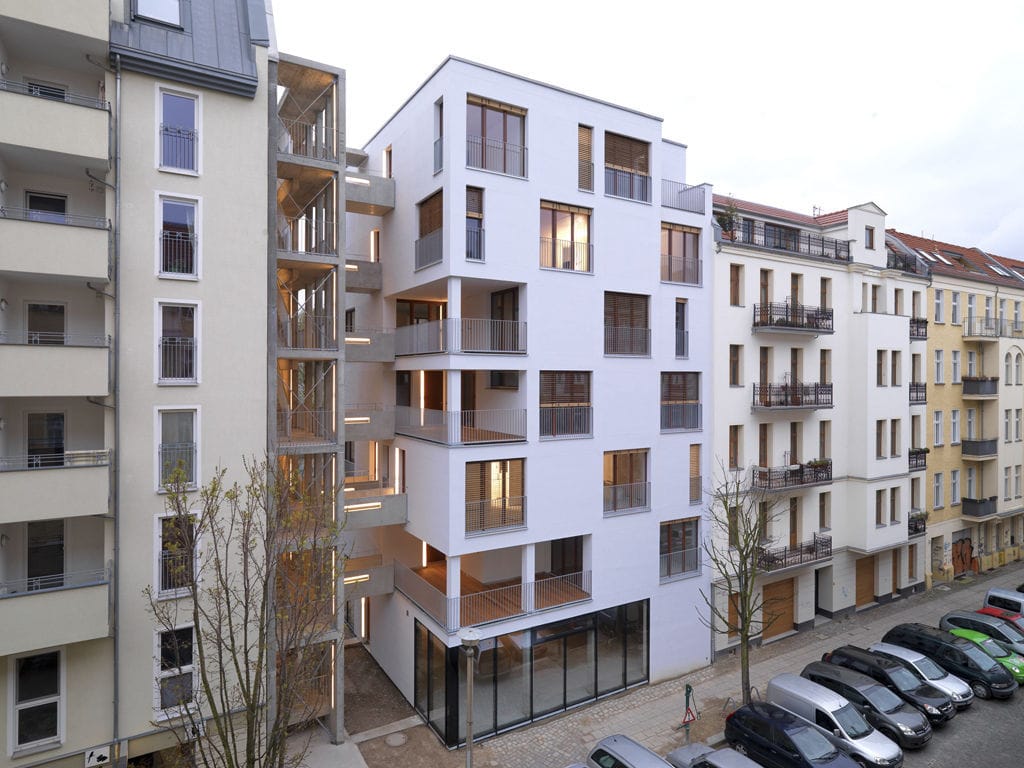
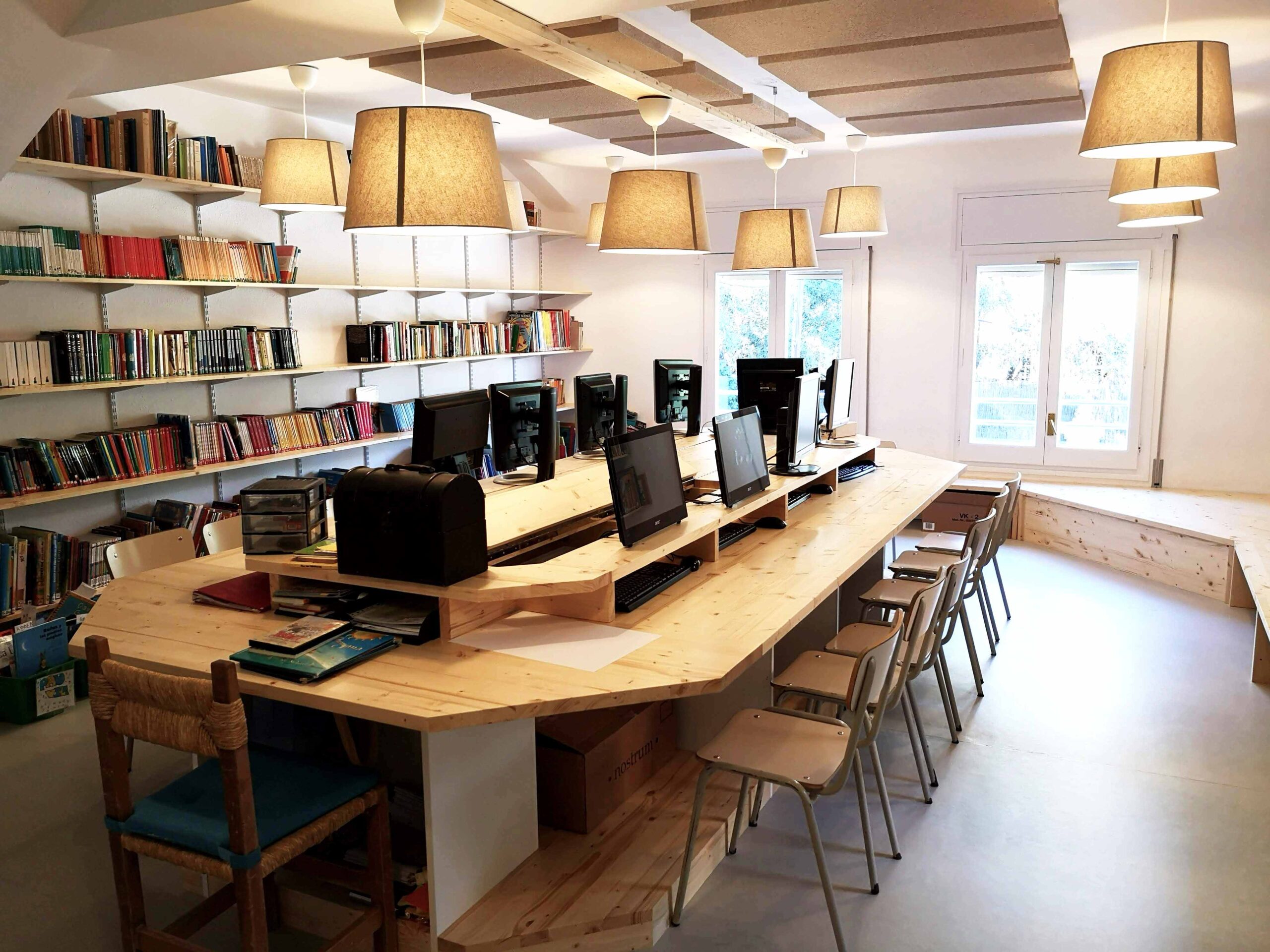
This way, any refurbishment, new build or interior design project in any construction sector can be carried out under Lean Construction. This methodology does not require large investments, but rather sufficient human resources.
Lean Construction Canto be applied to any project that seeks to save costs and reduce delivery times
What are the benefits of implementing Lean Construction?
The Lean Construction methodology has been in full development since its implementation began in 1996. It continues to be developed in its various methods and systems, adapting to each country, region, and company. Its results are highly favourable for the industry in economic, social, and environmental terms. Some of the benefits are set out below:
Economic impact on construction and business efficiency
- A reduction of 101% in costs and of more than 201% in project completion timesThe reason why Lean Construction has been adopted in a large part of the worldUSA. The United Kingdom, Latin American countries like Chile or Brazil, and Northern European countries have already begun to adopt this new way of building.
- Greater profit margin for businessesthe Chilean mining companies Those who implemented Lean Construction achieved profit margins ranging from 31% to 148%, in contrast to the figures of -318% and -301% for cases where the Lean system was not implemented.
- Increased labour productivityone McGraw Hill Construction Report In 2013, it revealed that the company Boldt Construction reduced hours-person per installed element from 24 to 7.
- Better budget compliance: This same report mentions that Rosedin Electric carried out a value stream analysis that ultimately saved the company 50,000$ in staff costs.
- Fewer accidents on site: In the Chilean mining sector, companies that implemented Lean Construction reduced accident and injury rates to 0.1 per 1,000 person-hours.
- Greater collaboration between the different teams Implementing Lean Construction stabilises production, facilitates control, reduces waiting times and fosters effective relationships.
- Smallest number of order changes and orders as all possible variables are considered from the outset.
- Fewer claims and lawsuits improvisation is eliminated and with it the uncertainty of the final outcome of the work.
Improving overall productivity
It is no surprise, then, that applying the Lean Construction methodology helps to drive the evolution of an industry whose productivity rate has fallen by 25% over the last 50 years, according to the Construction Industry Institute and the Lean Construction Institute. Furthermore, this industry generates up to 57% of waste in terms of time, effort and materials that add no value whatsoever to the final product. Through Lean Construction, value is added by generating benefits for each of the stakeholders involved.

Source: www.leanconstruction.org
In Spaces Evaluate we integrate the implementation of Lean Construction with the application of sustainability and well-being standards such as LEED, BREEAM, Passivhaus, or Alright.If you'd like us to help you implement Lean Construction on your project, and save on construction costs and delivery times, Contact us.

Israel Leal Vegas
Architect, Spaces Evaluate