Article updated for WELL V2 Certification: April 2021.
Did you know that we spend 90% of our lives indoors? Did you know that the air in these spaces is 2 to 5 times more polluted than the air outside? Dozens of articles are published every day that include compelling data about our relationship with the spaces that house our daily activities. It is evident that the quality of our built environment has a direct impact on our physical, mental and emotional wellbeing and our ability to perform at our best. Therefore, the WELL Building Standard has set out to provide a series of scientific strategies that allow us to improve the building's impact on us.
A healthy environment not only extends and improves our quality of life, but also makes us more productive.. This evidence has been proven in the business world, and there is currently a growing trend leading more companies to want to be healthy businesses, which invariably involves achieving Healthy office.
These improvements can also be achieved in residential, hospital, commercial buildings and interior space renovations. Furthermore, architectural health criteria are becoming increasingly relevant in project development, especially concerning the Current context of COVID-19. In this article, we explain why WELL Certification is the most suitable for achieving these benefits in your building.
How to achieve a healthy building? The WELL Building Standard
There are countless options for certifying your company, home, business, or building. However There is only one that holistically encompasses both the physical environmental factors and the policies that will make your space or building a healthy building.The WELL Certification, or as it's known in the United States, the WELL Building Standard. Furthermore, it should be mentioned that the latest version of the WELL Certification allows this the process be much more inclusive and flexible when presenting more optional credits and the opportunity to certify various types of spaces and buildings.
What is the relationship between WELL Certification and LEED Certification?
The WELL Building Standard, managed by the International WELL Building Institute, is similar to LEED Certification (managed by the USGBCin its conception, in fact, much like LEED, it is certified by the Green Business Council Inc. (GBCI for its acronym in English). If LEED certification ensures compliance with sustainability and energy efficiency standards, the WELL Building Standard guarantees that the certified space works for the health and wellbeing of its occupants.. Both certifications are perfectly complementary and applicable to entire buildings as well as business spaces within them. When WELL and LEED are implemented in the same project, building performance is optimised for the benefit of the environment and the health of the occupants.
The WELL Certification is the only one that holistically encompasses both the physical factors of the environment and the policies that will make your building a healthy building.
What does the WELL Certification involve?
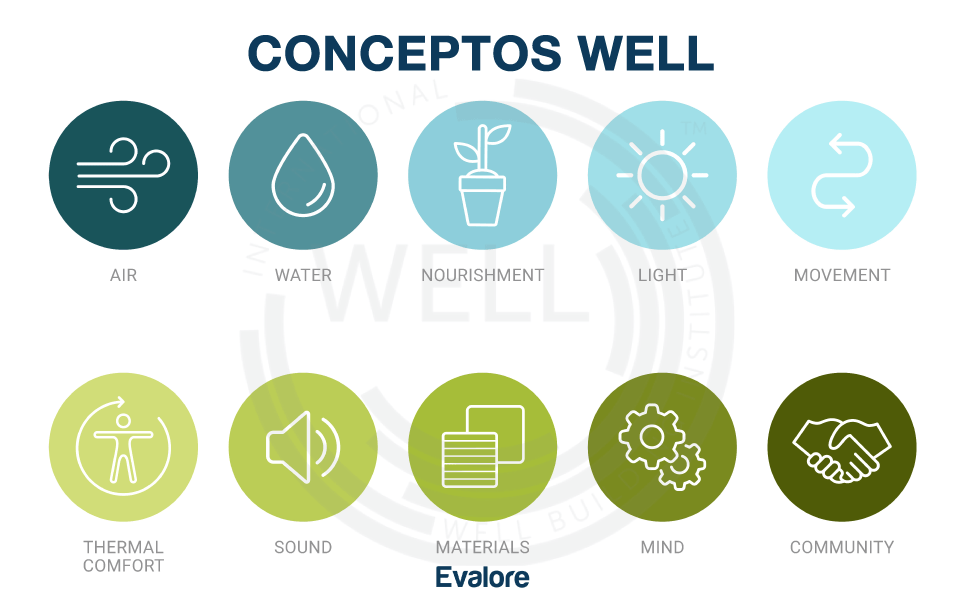
The new version of the WELL Certification consists of 10 areas of action, including a series of measures within each. Some of these measures are mandatory and others optional for achieving certification. Compared to the previous version, This is more inclusive and flexible by presenting fewer mandatory measures and more optional measures.. These are the 10 areas of the WELL Building Standard and their objectives:
Air
Removal of air pollutants, pollution prevention and air purification
Water
Filtration, treatment, and strategic location of water points
Food
Establishment of healthy food options and promotion of healthy eating
Lighting
Access to natural light and improvement of artificial light quality
Movement
Promotion and integration of activities that allow for an active lifestyle
Thermal comfort
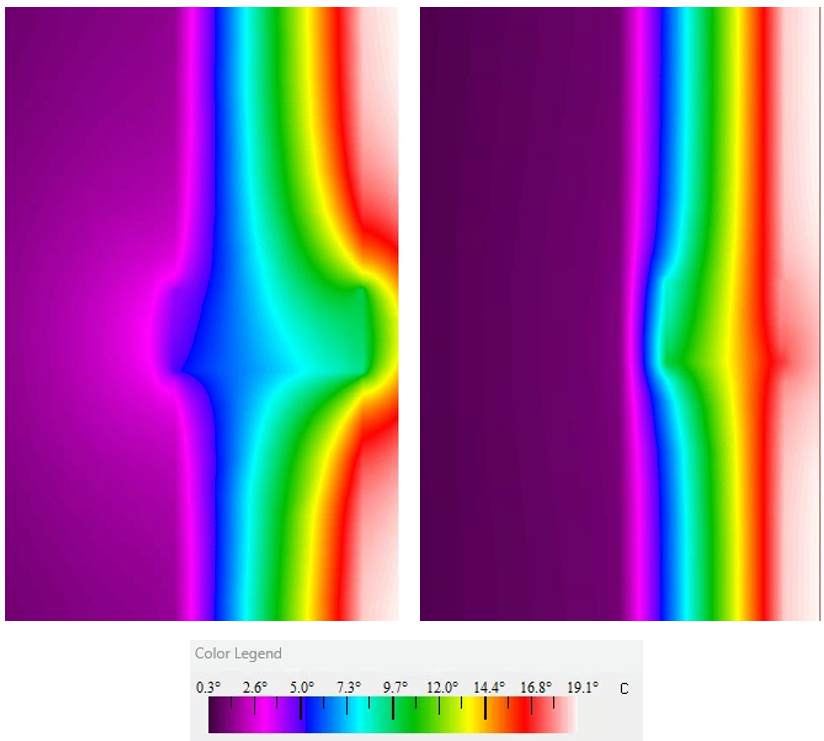
Suitability of the space to maximise thermal comfort and avoid energy loss
Acoustic comfort
Suitability of the space to maximise sound insulation and acoustic absorption and mitigate the harmful effects of noise
Materials
Analysis of material components to ensure they are non-emissive and reduce exposure to environmental pollutants
Mind
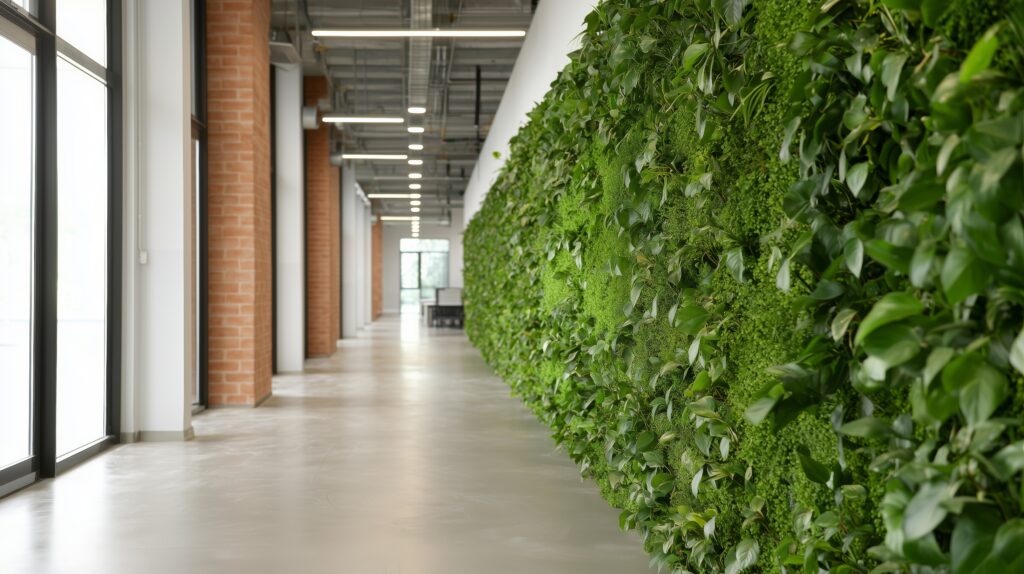
Improving spatial perception through biophilia and the incorporation of corporate wellness policies
Community
A culture of health and an inclusive community committed to these values
What are the benefits of WELL Certification?
Return on investment
If we are referring to residential buildings, WELL Certification ensures economic advantages in the sale and rental of properties. Residential buildings certified under the WELL scheme see an increase in their market value and are let and sold 60% faster.
When referring to a business, we know that human capital accounts for 90% of the total costs involved in keeping it running, including the management and maintenance of premises, energy costs, rent, etc. The medical-scientific evidence collected over 10 years by the International Well Building Institute demonstrate that with the implementation of WELL Certification measures, benefits such as:
- Cost reduction through decreased stress and absenteeism
- Productivity increase
- Contributes to talent retention
- Improvement of employee morale
Marketing
A WELL building is a powerful marketing tool to showcase the Your company's social and environmental commitment. Show that your company, business, or residential building is making real and tangible efforts for the well-being of its occupants. Furthermore, demonstrate that it has been recognised by the most prestigious organisation for well-being implementation worldwide, the International Well Building Institute.
Quality standard
With WELL Certification, the project ensures that the built environment meets strict sustainability, health, and wellbeing criteria detailed in the WELL Building Standard. Beyond the complexities of each project, applying the WELL Certification process guarantees that all objectives defined at the outset are maintained, along with the veracity and quality of the proposals.
Cualquier persona implicada en el diseño y construcción de edificios puede obtener la Certificación WELL. Esto incluye arquitectos, diseñadores, constructores, propietarios de edificios y gestores de instalaciones.
There are currently almost 6,000 registered projects seeking WELL certification in over 65 countries. Although most are for office spaces, The WELL Building Standard is also applicable to housing projects, educational centres, commercial premises and restaurants.. Furthermore, WELL Certification is applicable to buildings and their envelopes as well as to independent spaces within them. An example is the case of business headquarters located in an office building.

How much does the WELL Certification cost?
WELL Certification costs are divided into project adaptation costs, certification costs and advisory costs. Project suitability and advisory costs The requirements for WELL Certification are very similar to those of LEED or BREEAM Certification. However, the cost of certification is higher than that of other certifications. This is because the achievement of some of its credits is conditional on obtaining concrete results during the measurement process, which requires the existence of a Right then, Assessor. This Well Assessor, assigned by the GBCI, in addition to having an advisory role during the certification process, will be responsible for carrying out the final visit that will determine the achievement of WELL Certification.
Implementation
The additional cost for project adaptation, consultancy, and payment of the certification to the organisation WELL does not exceed the PEM's 2%. In fact, depending on the project, the cost overrun may be less than 11% of the project budget.
Savings
Referring to residential buildings, a study in the USA has shown that Homes certified under the WELL scheme have seen their value rise by 20%. Likewise, their operating costs are reduced due to a series of measures that allow them to better take advantage of environmental conditions.
In the case of offices, the most appropriate way to evaluate the cost of implementing the WELL Building Standard is by contrasting it with the Cost savings from personnel expenses. These savings are due to increase in employee health, wellbeing, and motivation levels. We must highlight that, in 2019, absenteeism from work due to stressful working environments alone resulted in losses of over 7 billion euros for Spanish companies. This must be added to the fact that, under the conditions of COVID-19, these losses increased to 8 billion in 2020.
In Spaces Evaluate we are specialists in implementing various certifications such as Passivhaus, WELL Health-Safety Rating, Biosphere, Airfirst, among others. TWe have an international presence and we are a Pioneering company in the implementation of health and well-being measures in major projects in Spain. Furthermore, we have developed our own method for implementing measures Wellness tailored to each client that allows you to obtain WELL Certification in a scalable and personalised manner. If you are interested in WELL Certification or in making your company a healthy company, do not hesitate to contact us and we will provide you with a Free diagnosis.

Pablo Muñoz, CPHD, LEED GA, BPI MFBA
Co-founder and CEO of Espacios Evalore SLP